
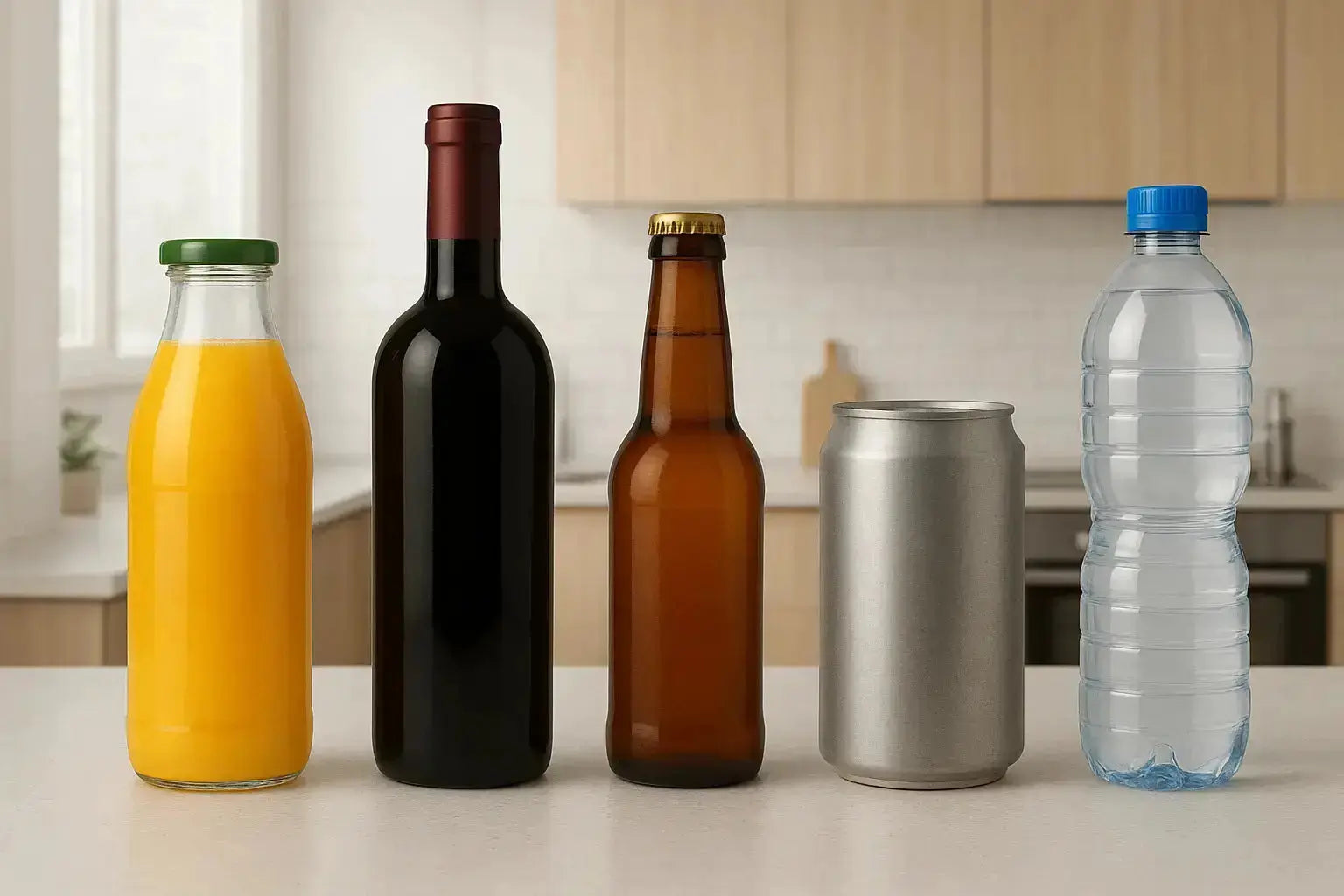
Bottle Types According to Beverage Type
In the world of beverage packaging, the choice of bottle type is not merely aesthetic—it’s a strategic decision that affects product preservation, perceived quality, logistics costs, and sustainability. In this guide, we’ll review the main types of bottles used in the beverage industry, their advantages and disadvantages, and when it’s best to use each option.
1. Key Criteria When Choosing the Right Bottle
Before exploring bottle types, it’s important to understand the factors that should guide your selection:
· Chemical compatibility: some beverages (juices, alcoholic drinks, carbonated beverages) may react with certain plastics or materials, so the container must be inert or include suitable barriers.
· Protection against oxygen, light, and gases: sensitive drinks (wine, beer, juices) require protection against oxidation or the penetration of oxygen or CO₂.
· Rigidity / mechanical integrity: the bottle must withstand transport, stacking, and pressure filling.
· Weight and logistics cost: lighter bottles reduce transport costs and emissions.
· Brand perception / “premium image”: the material and design directly influence how consumers perceive the product.
· Sustainability and recyclability: increasingly demanded by both regulations and consumers.
With that in mind, let’s look at the most commonly used materials and formats.
2. Most Common Materials and Formats
Advantages
· Chemically inert, does not alter taste or aroma.
· Excellent barrier against gases and light (especially colored glass).
· High-quality or “premium” perception.
· Infinitely recyclable.
· Stable for carbonated and sparkling beverages.
Disadvantages
· Fragile: risk during transport and handling.
· Heavier weight: increases logistics costs.
Advantages
• Lightweight and impact-resistant.
• Lower transport and handling costs.
• Suitable for still or low-pressure beverages.
• Can use recycled PET (rPET) or barrier additives to improve performance.
Disadvantages / Challenges
• Relatively permeable to oxygen and CO₂ (though this can be mitigated with internal barriers).
• Regulations require a minimum percentage of recycled PET and tethered caps (in Europe).
Common Uses
• Water, soft drinks, sports drinks, juices, non-carbonated beverages.
• Single-serve or multi-size lightweight formats.
• Bottles with enhanced barriers for more sensitive beverages.
• Advantages: excellent barrier against light and oxygen, lightweight, recyclable.
• Common Applications: cans (more often than bottles), “metal canister” packaging for energy drinks or specialty beers.
3. Conclusion
There is no single “best” type of bottle—each beverage, brand, and value proposition may require a different solution. The key is to integrate technical, economic, logistical, and brand perception criteria.
If you need help with your packaging, Thepackstock will be happy to advise you.


